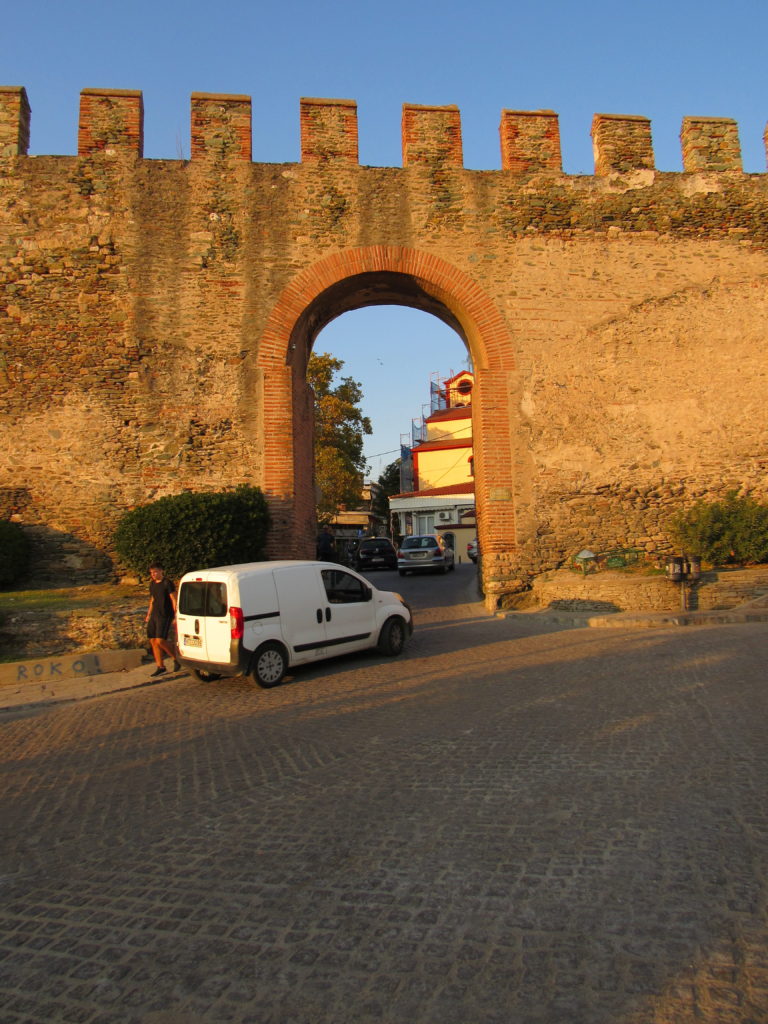
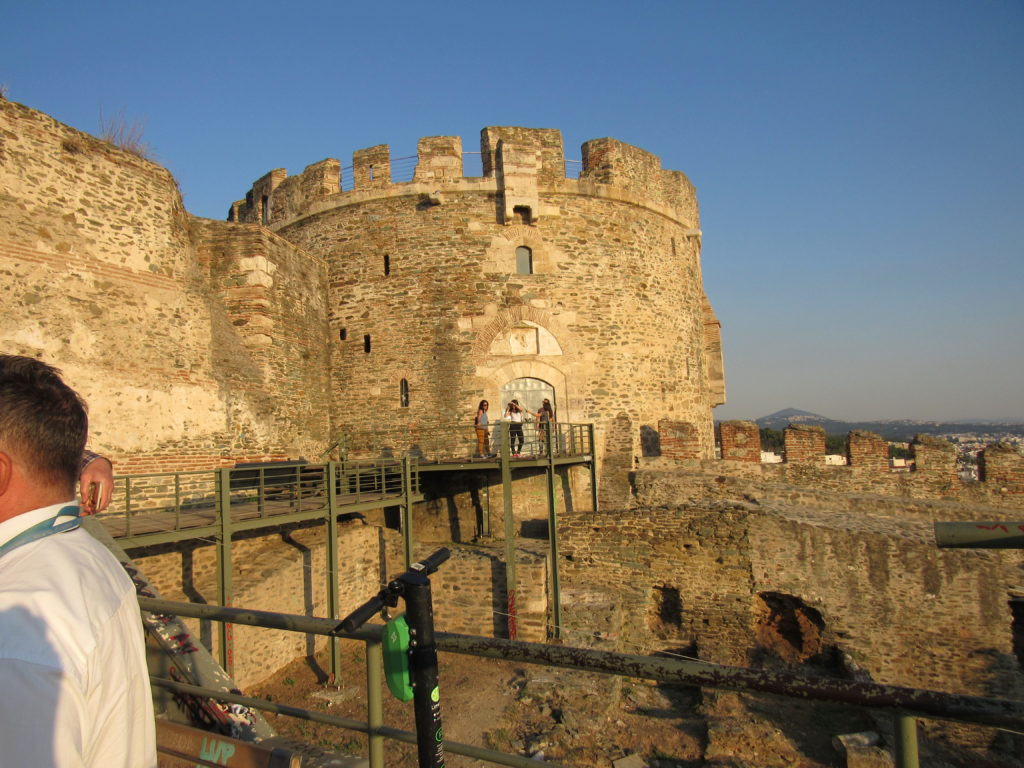
Oct 4, 2019

Day 5: Friday, 04 October 2019

After your breakfast, you were picked up for transferred to the port of Piraeus for embarkation to the M/V Celestyal Majesty for our 4 Days / 3 Nights Iconic Aegean Cruise. We departed at 11:00am local time. During lunch Harriet and Doron were greatly surprised to see Mike, our bus driver from Israel show up on board with us. Neither Mike nor Doron knew the other would be onboard.

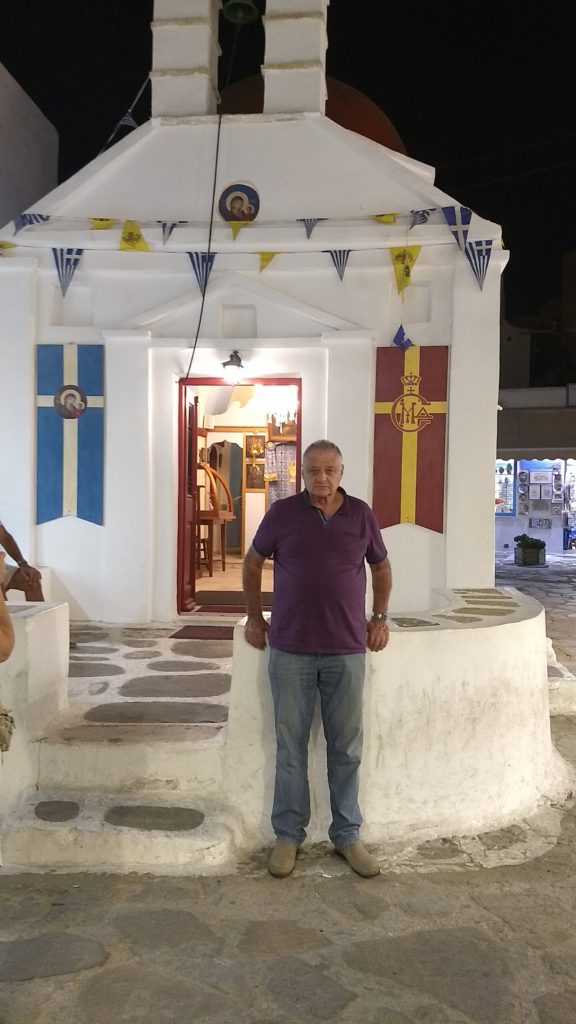
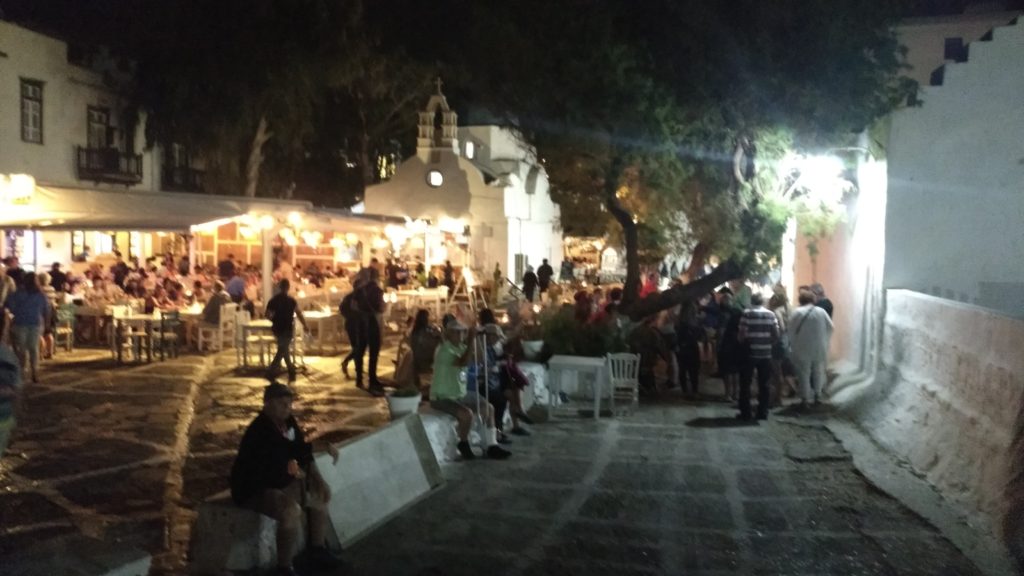
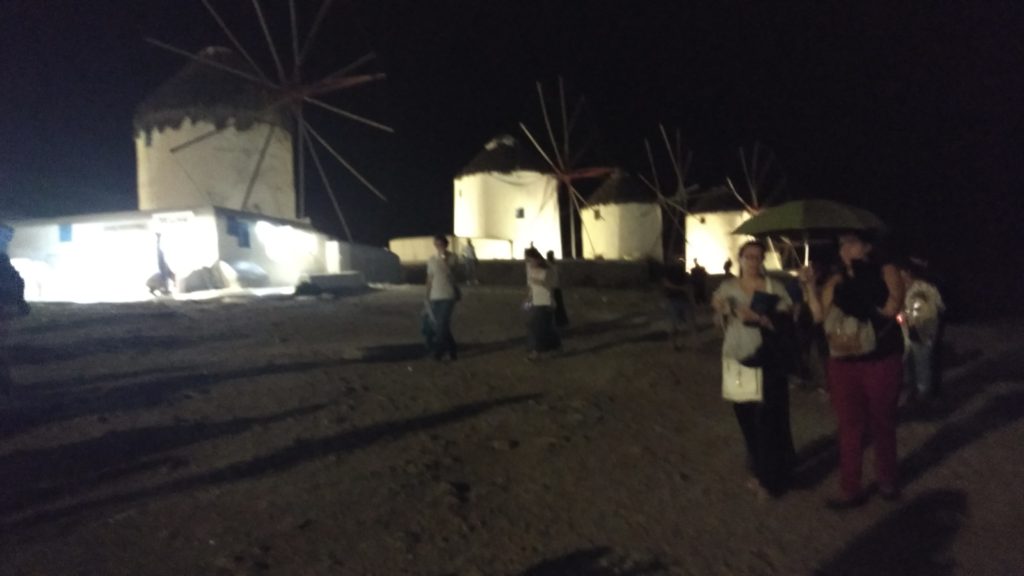
In the afternoon we arrived in Mykonos. The island of Mykonos is a marvelous cosmopolitan holiday hotspot that combines an international jet-set atmosphere and stimulating nightlife. Some of us signed up for a walking tour and others just went for a nonchalant stroll in Mykonos town to admire the whitewashed houses and flowered balconies. We had the opportunity to see Mykonos island’s trademark, the windmills and the charming area of Mykonos Little Venice.

Categories: 2019 Greece, Uncategorized

Oct 3, 2019

Day 4: ThursOay, 03 October 2019

WE WILL ADD PICS AT A LATER DATE – LOW CONNECTION

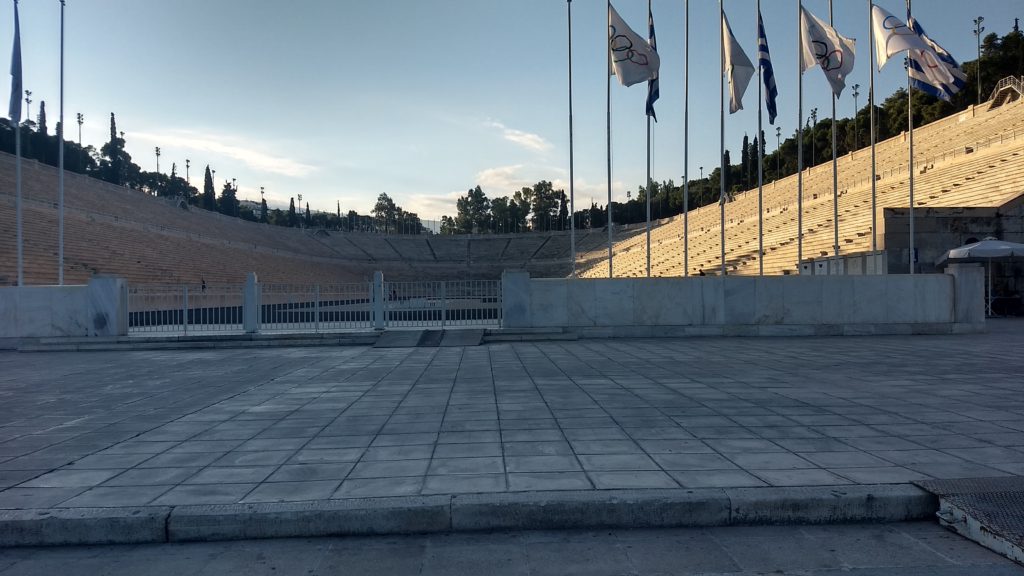
Today our tour in Athens began with a the city tour to the Olympic Stadium.

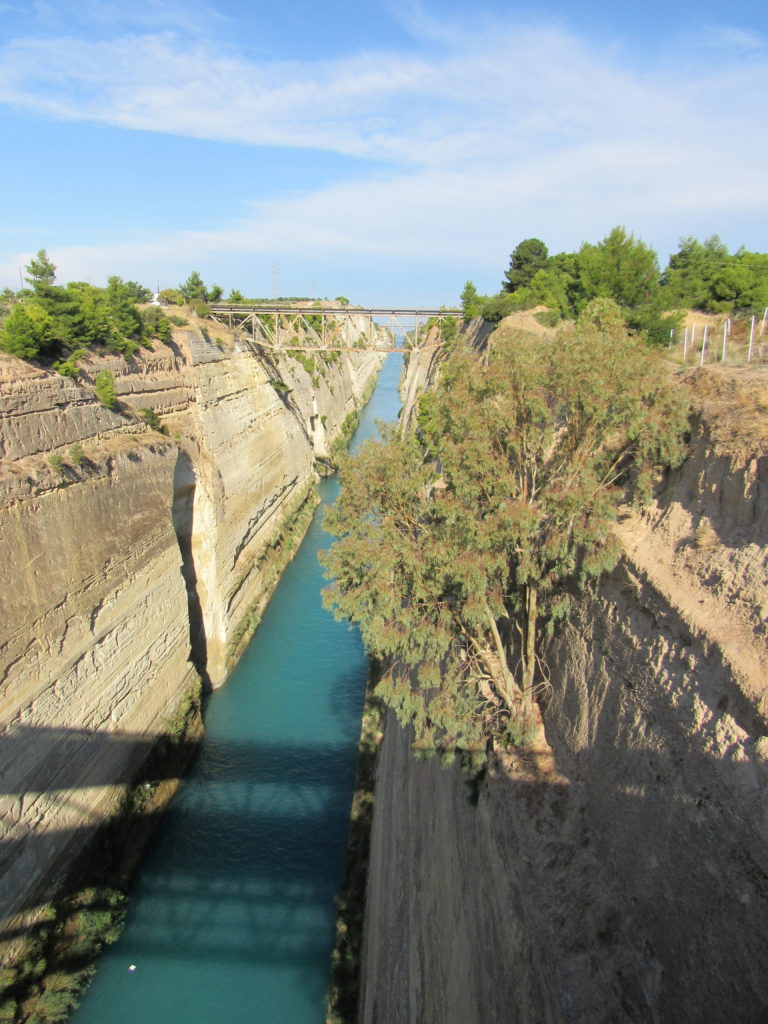
and we drove by the House of Parliament and the Tomb of the Unknown Soldier. With our driver we proceeded to the city of Corinth. Our first stop was at the Corinth canal to enjoy the magnificent view and take photos.

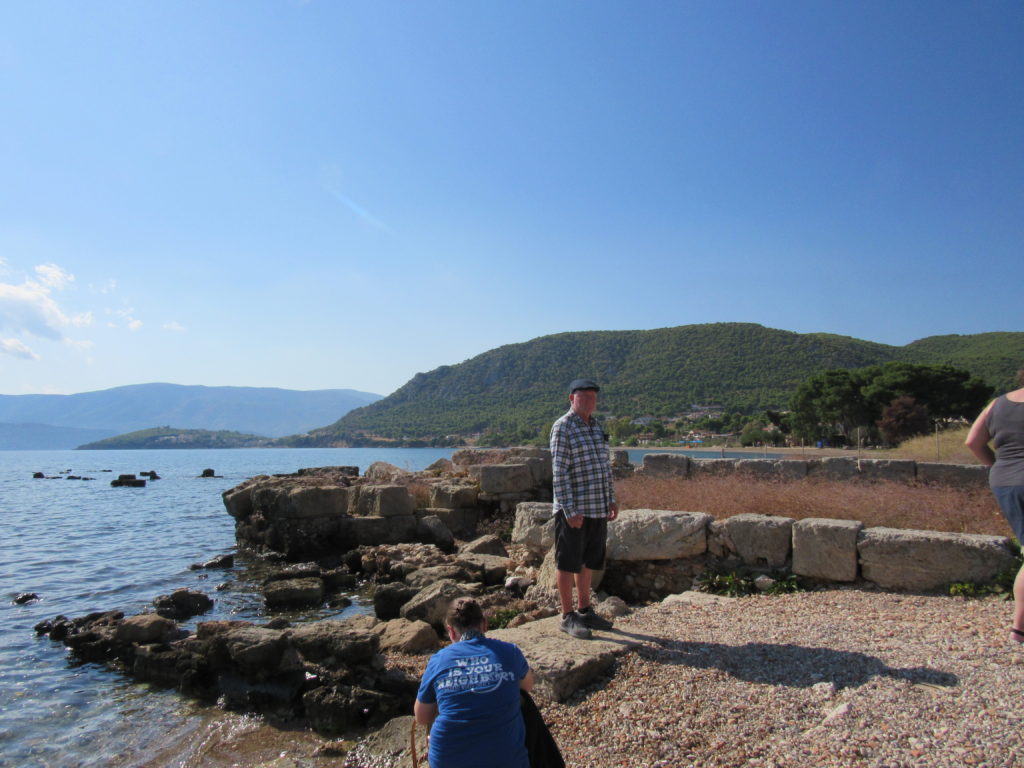
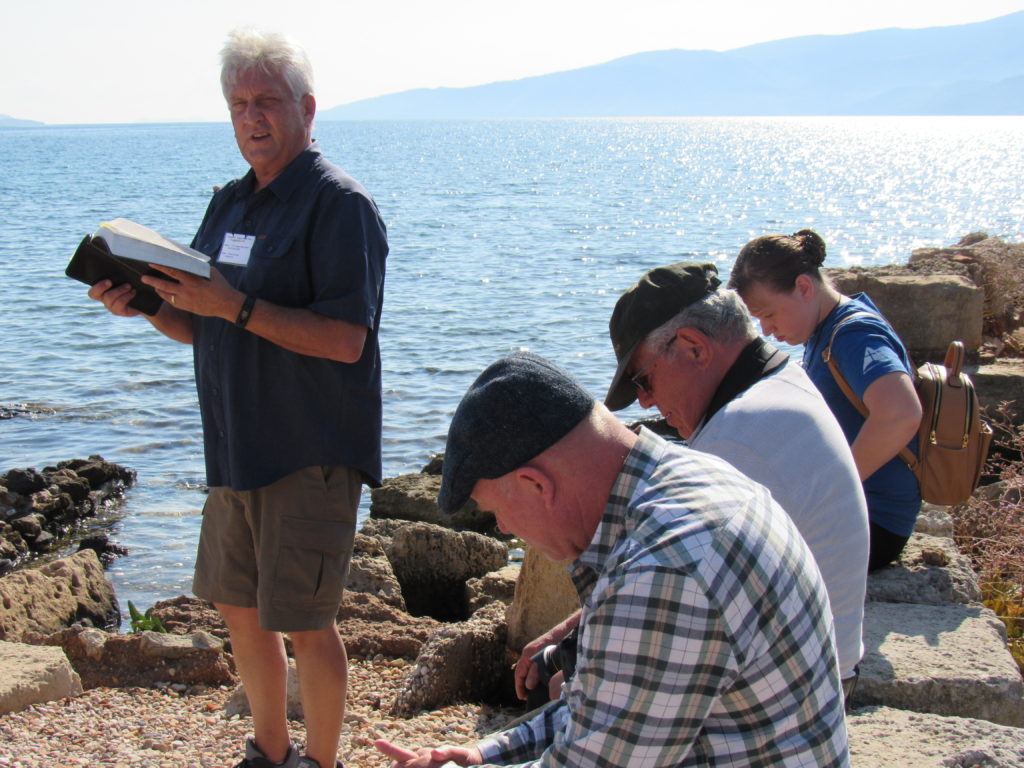
On our way we stopped at the Port of Kenchree

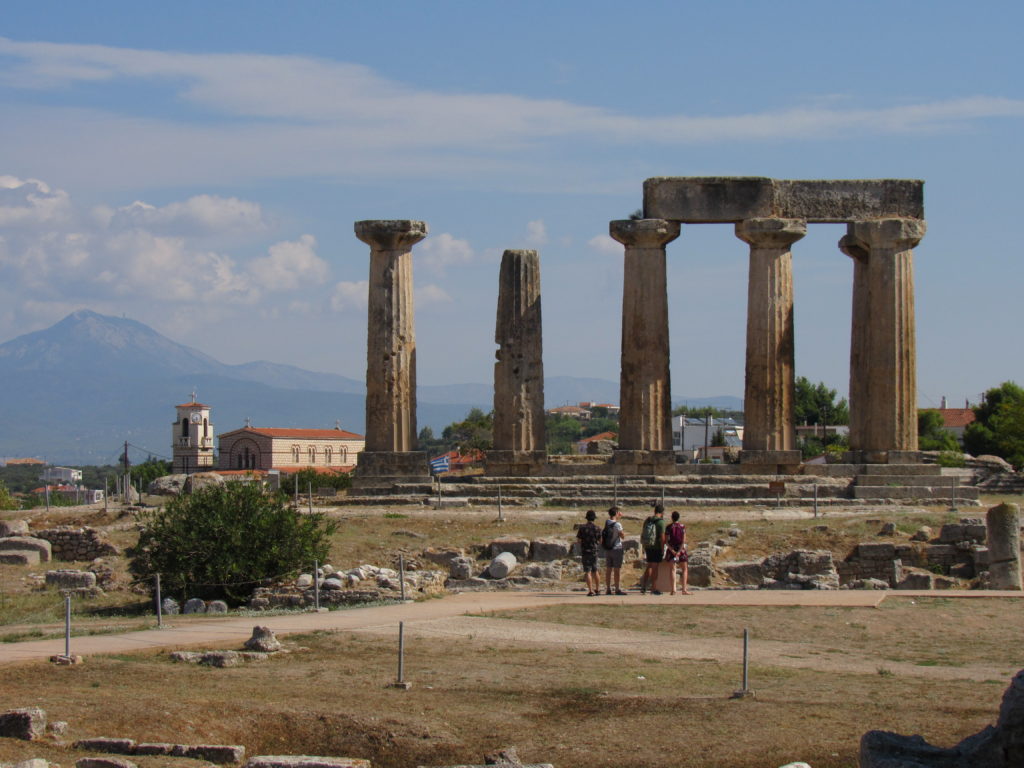
and then on to the archaeological site of Ancient Corinth, where Paul wrote his most familiar letters and visit the Archaeological Museum, the Bema, the Market place and the Temples.

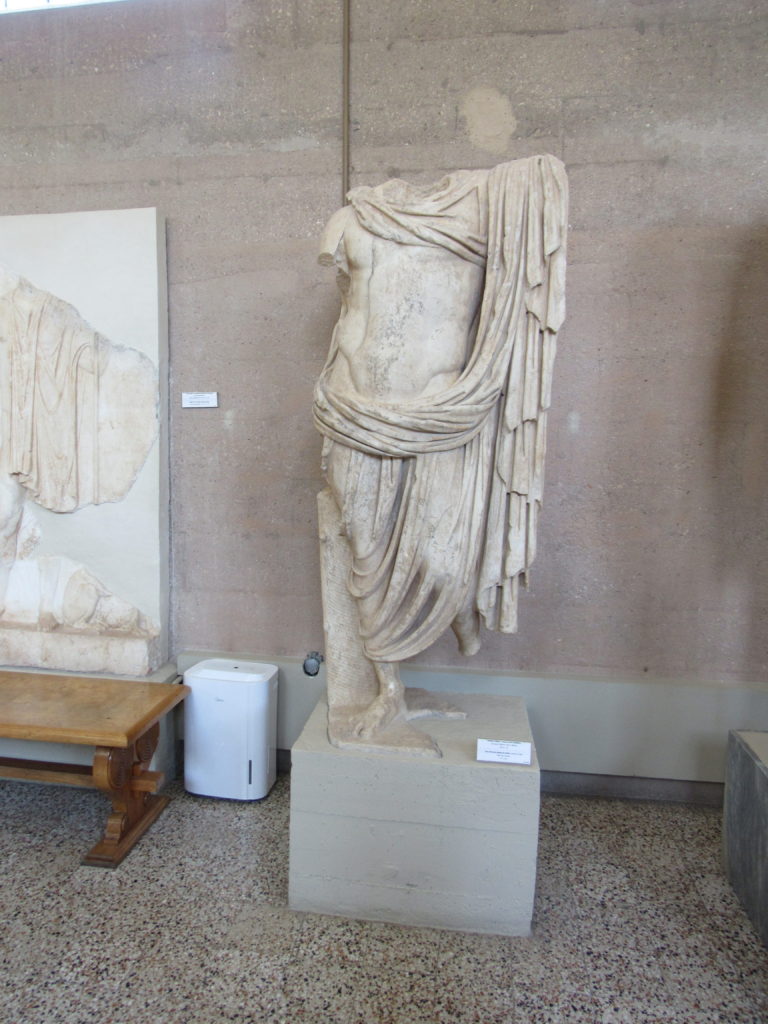
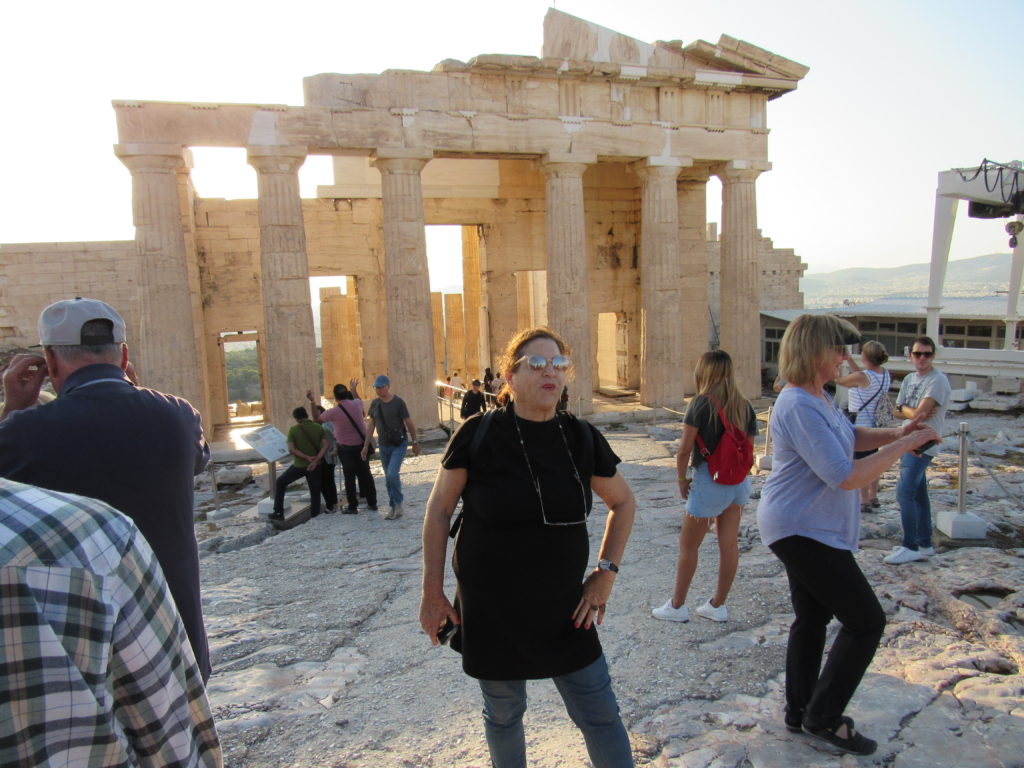
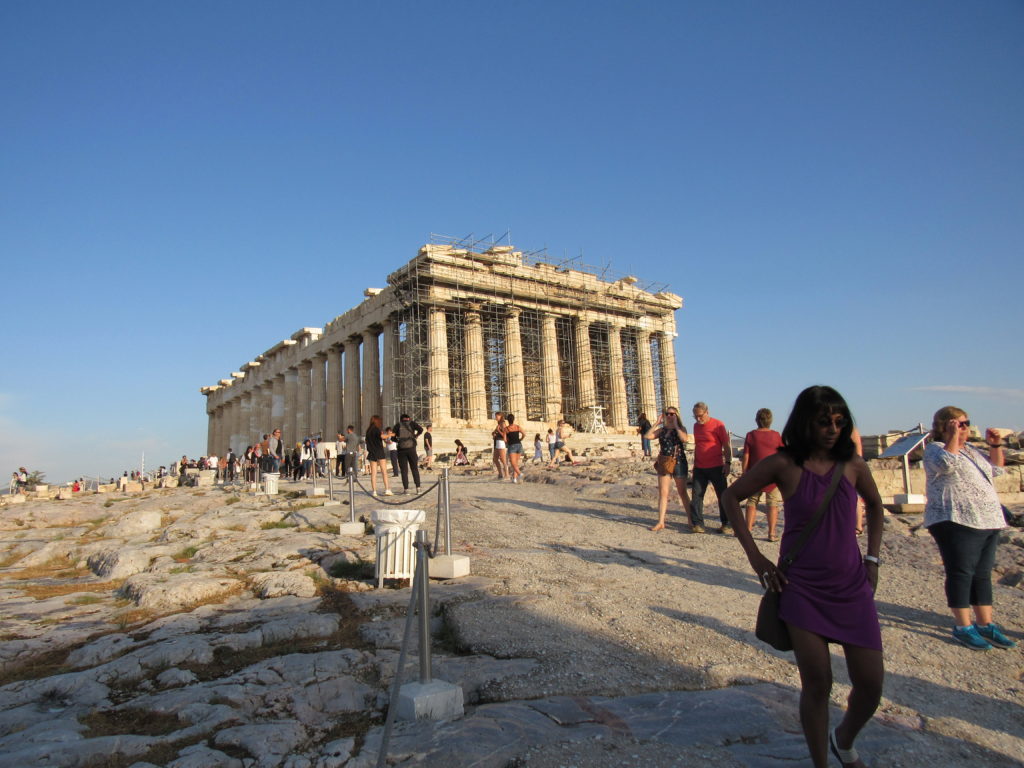
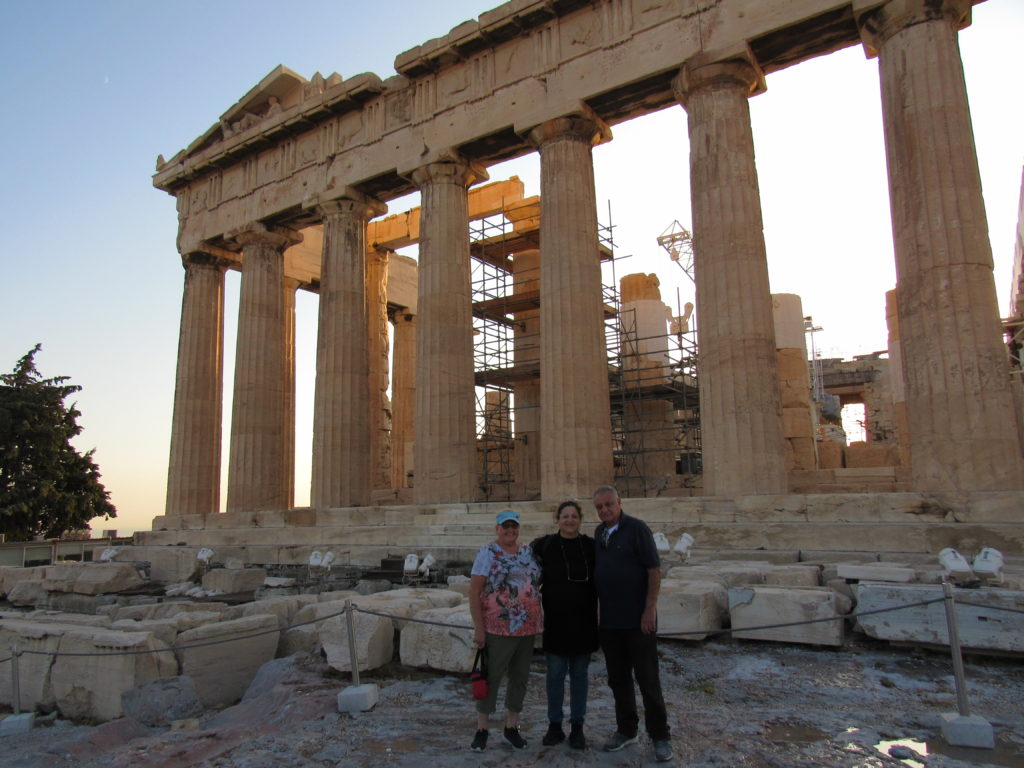
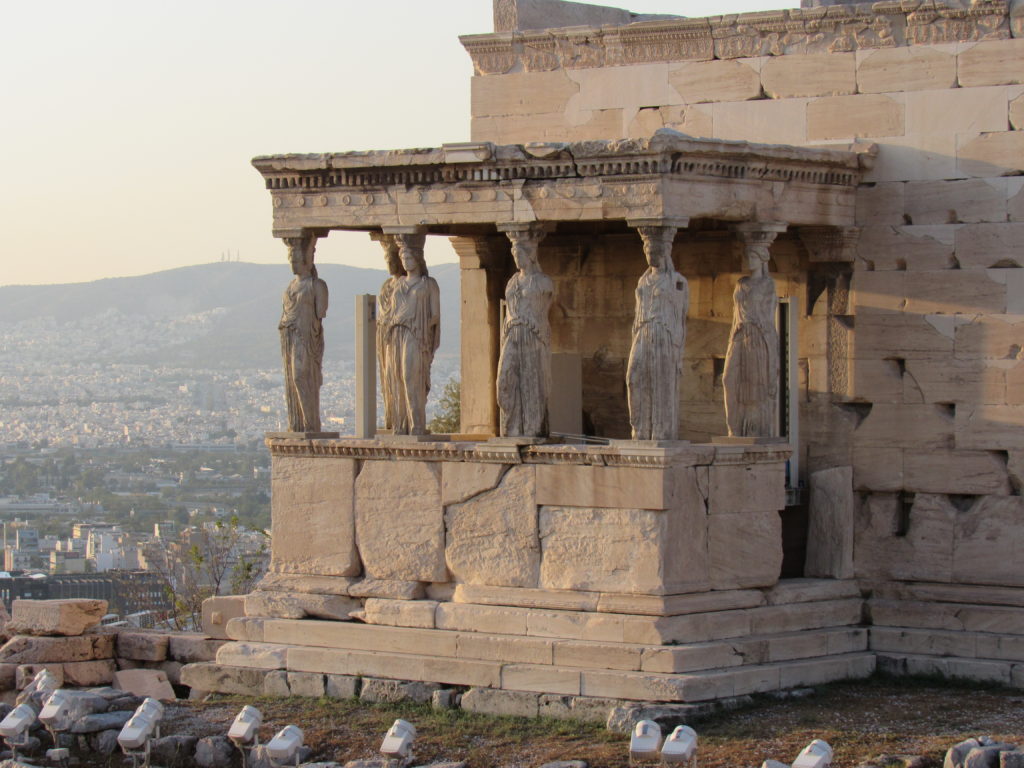
After lunch and thru a downpour we returned to Athens to visit the Acropolis, the Parthenon and Mars Hill where Paul stood and preached We met up sith Doron and Ida at the entrance.

Ida Heiliger

After a full day we headed to our Hotel the Mediterranean Palace

Categories: 2019 Greece, Uncategorized

Oct 2, 2019

Day 3: Wednesday, 02 October 2019

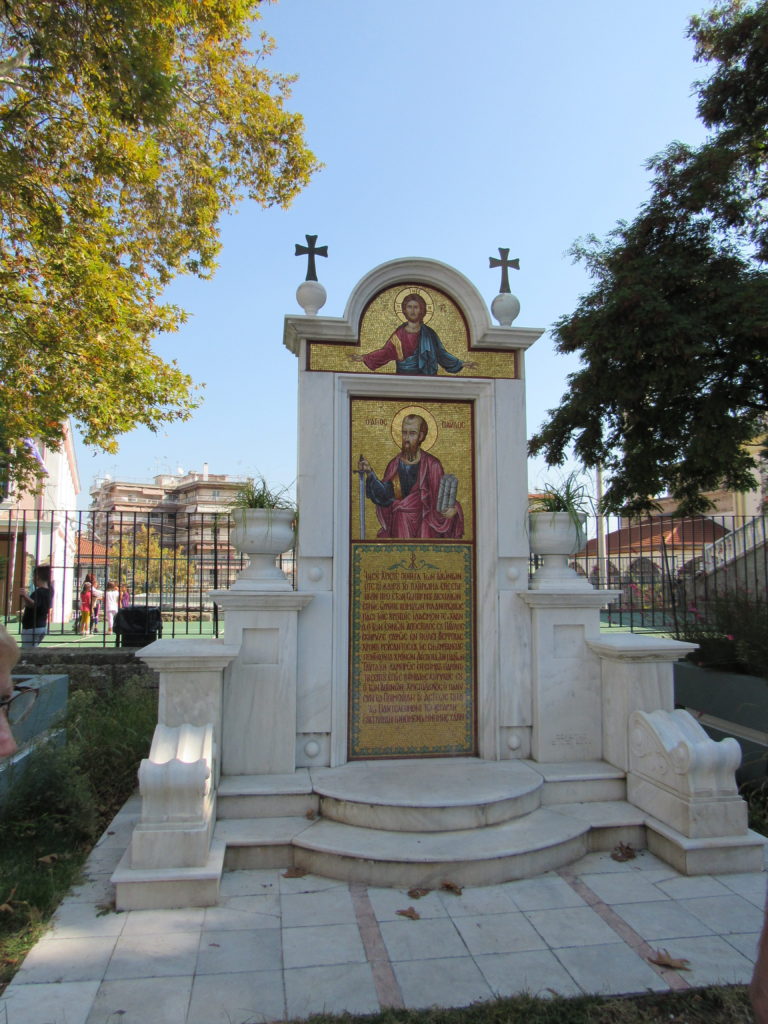
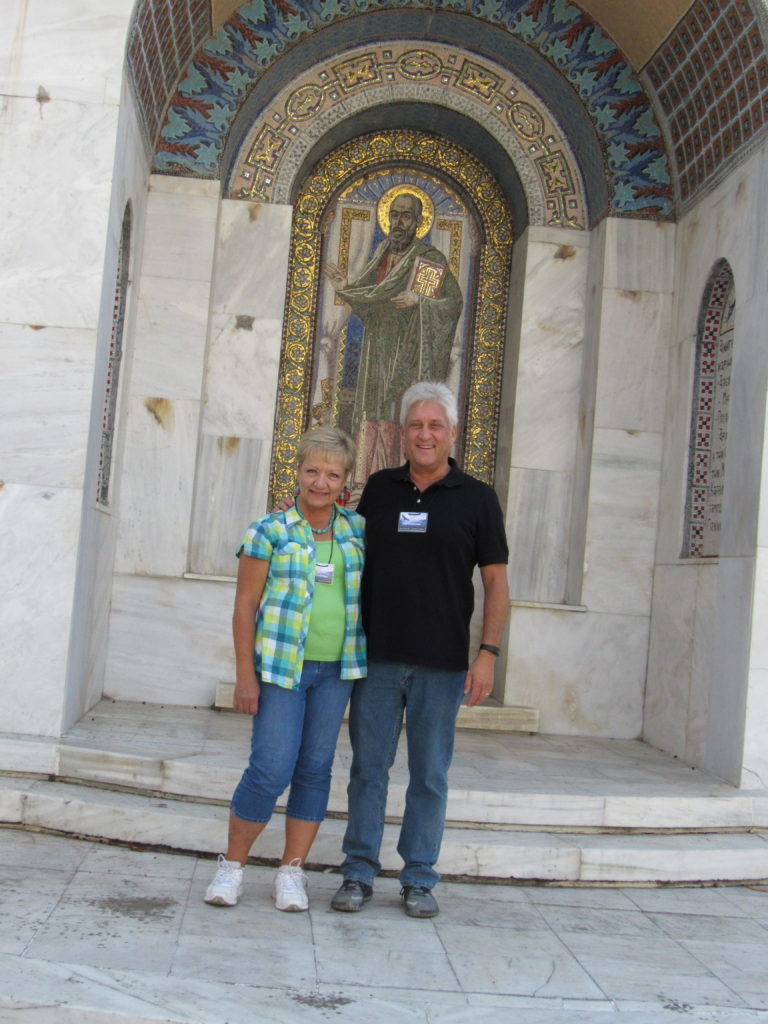
Today we visited Berea with the famous mosaics of Paul.

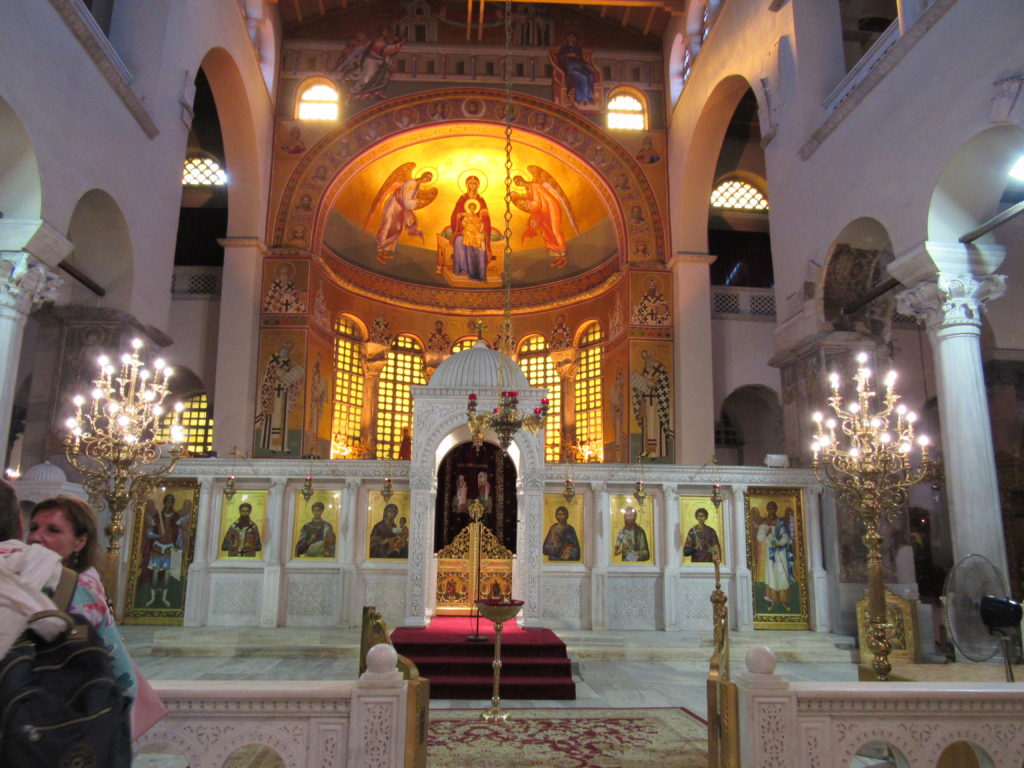
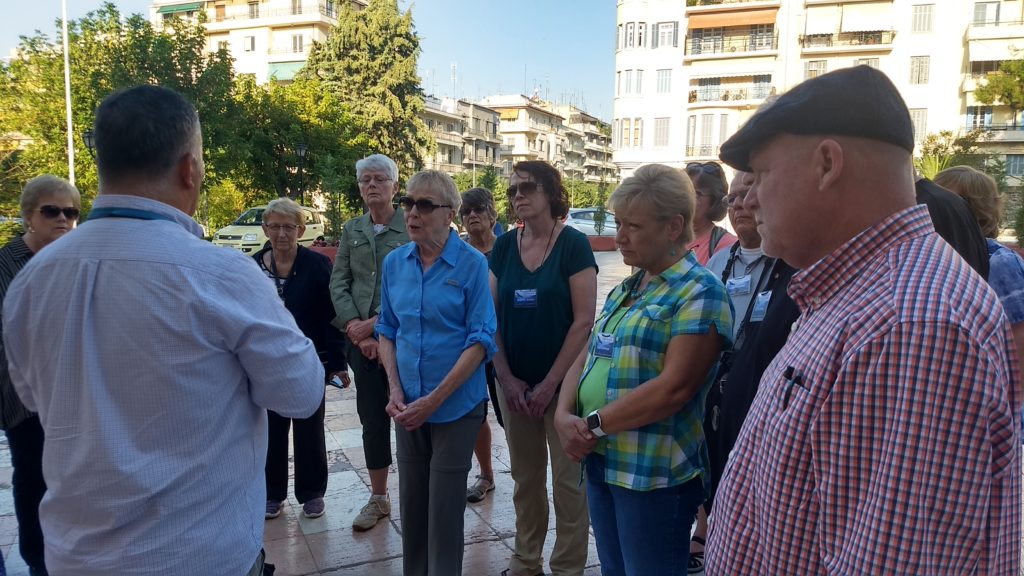
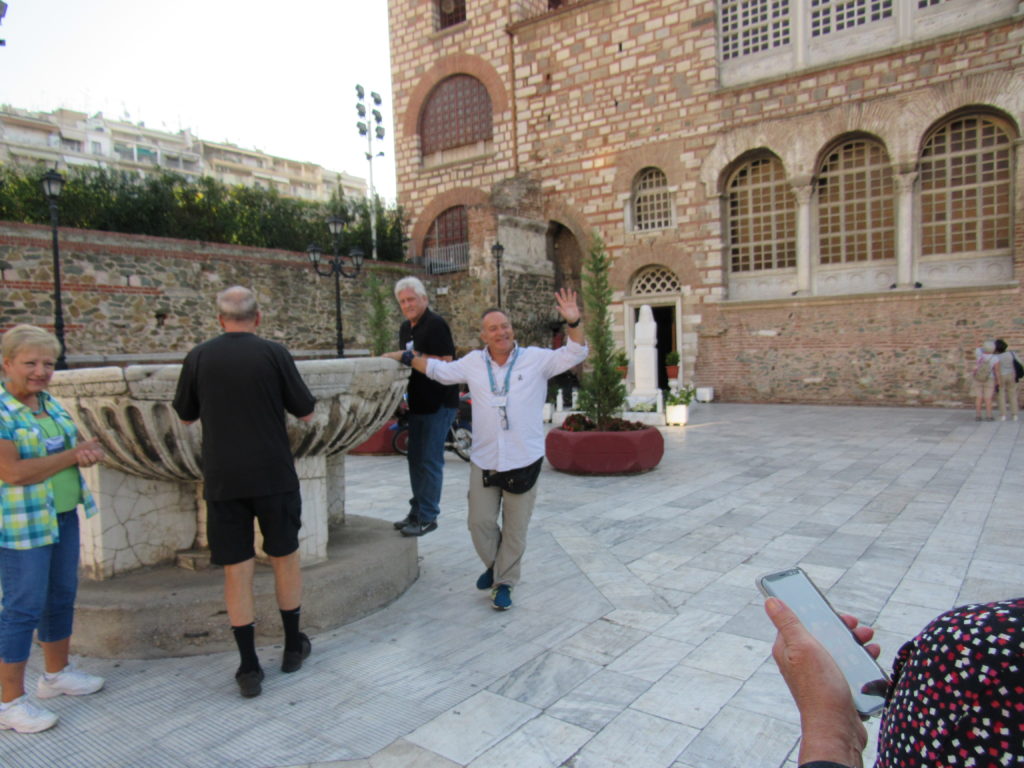
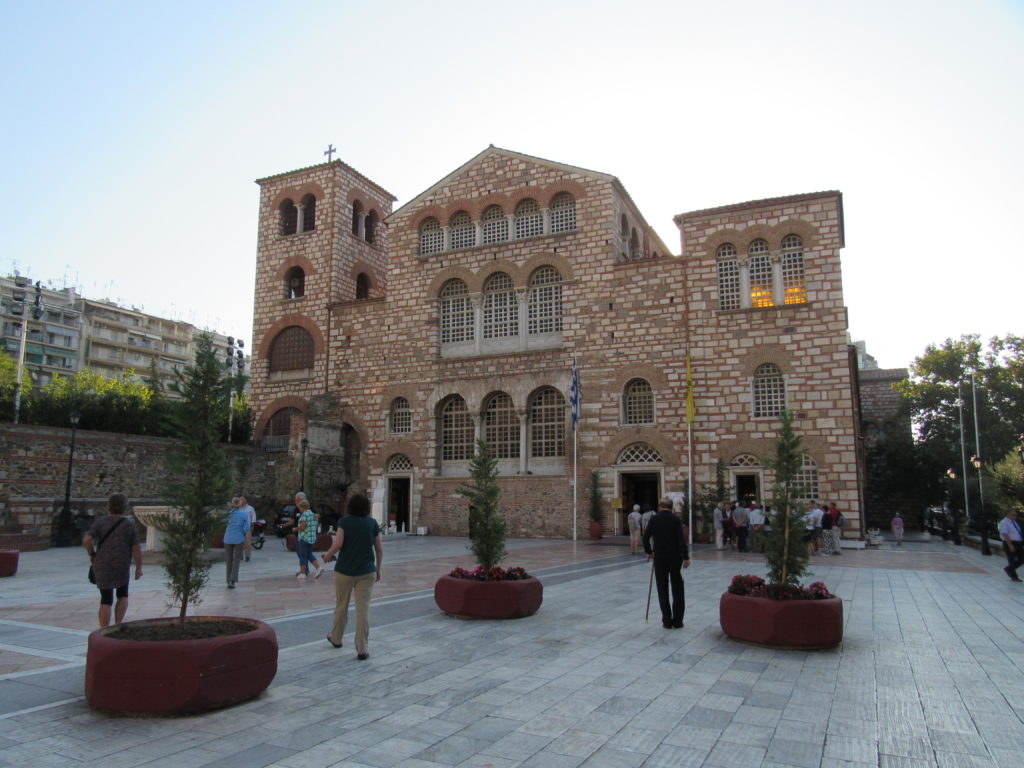
We continued with the visit of the city of Thessaloniki, including St. Demetrius Basilica

We were dropped off at the airport of Thessaloniki for check for our flight to Athens. Departured at 2:50 PM. We arrived in Athens at 3:40PM and we went to our hotel for check in, dinner and relaxation.

Categories: 2019 Greece, Uncategorized

)ctober 1, 2019

Enjoy your breakfast at hotel in Thessaloniki. 

After a great breakfas this morning we derparted from our hotel for Lydia Springs, Philippi and the beautiful city of Kavala. On our way we stopped to see a recently reconstructed sculpture of the Lion Monument which is a fourth century funery monument to Admiral Lamedon a devoted companion of Alexander the Great .

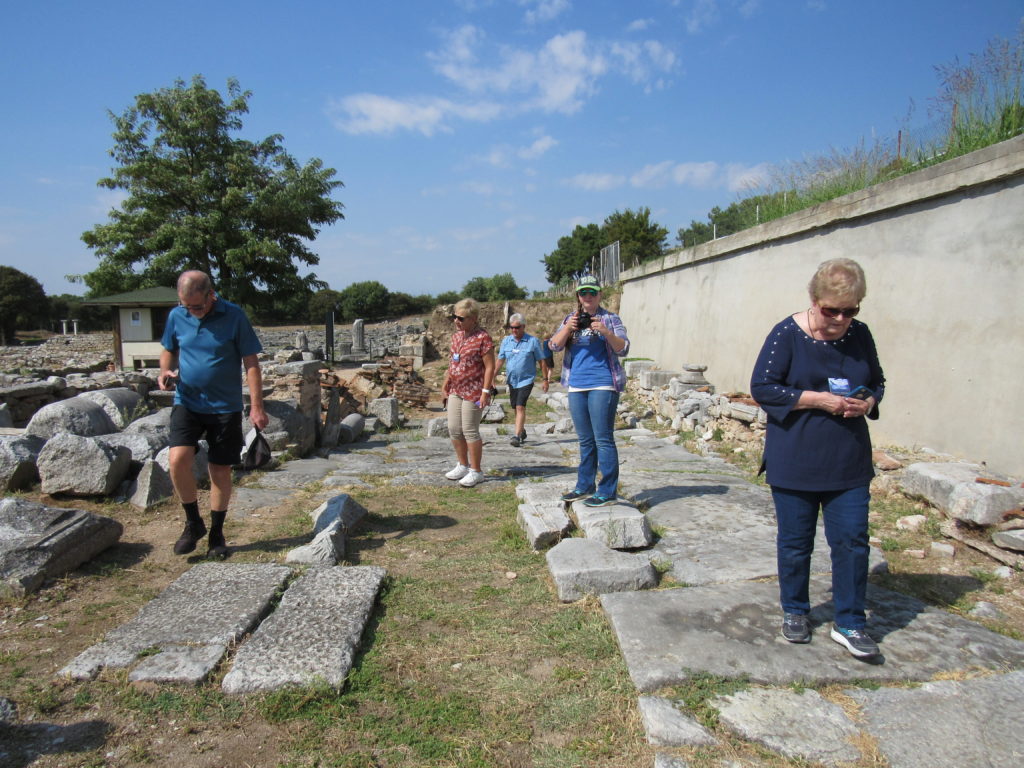
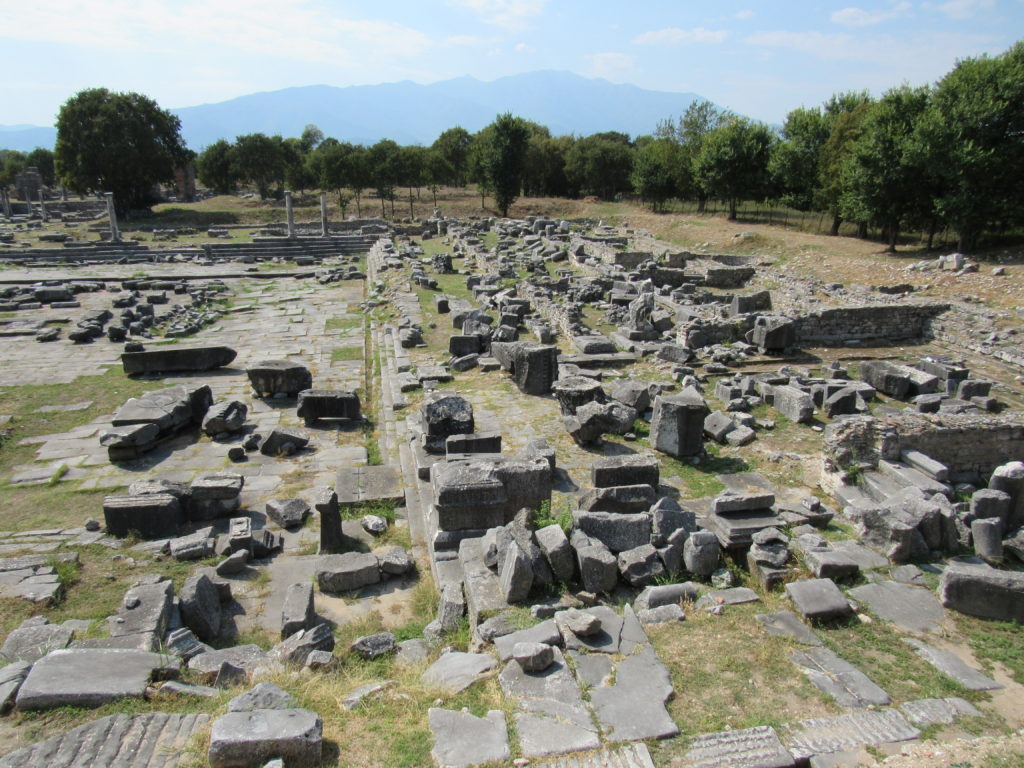
We then proceeded to Phillipi where Paul preached his first evangelical sermon and where early Christians were baptized on European soil.

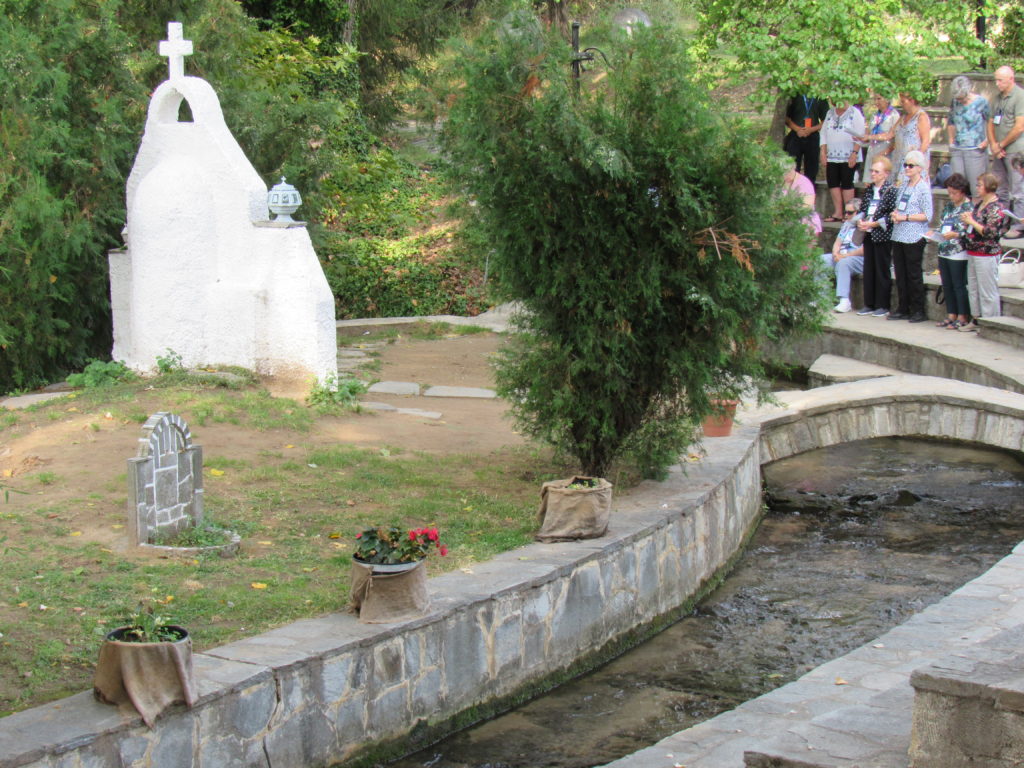
The Baptismal site

We visited the baptismal site where Lydia converted to Christianity. Our tour continued with a visit to a crypt from the Roman period that is believed to have served as a prison for St. Paul, the Market place, the famous Acropolis and the Theatre.

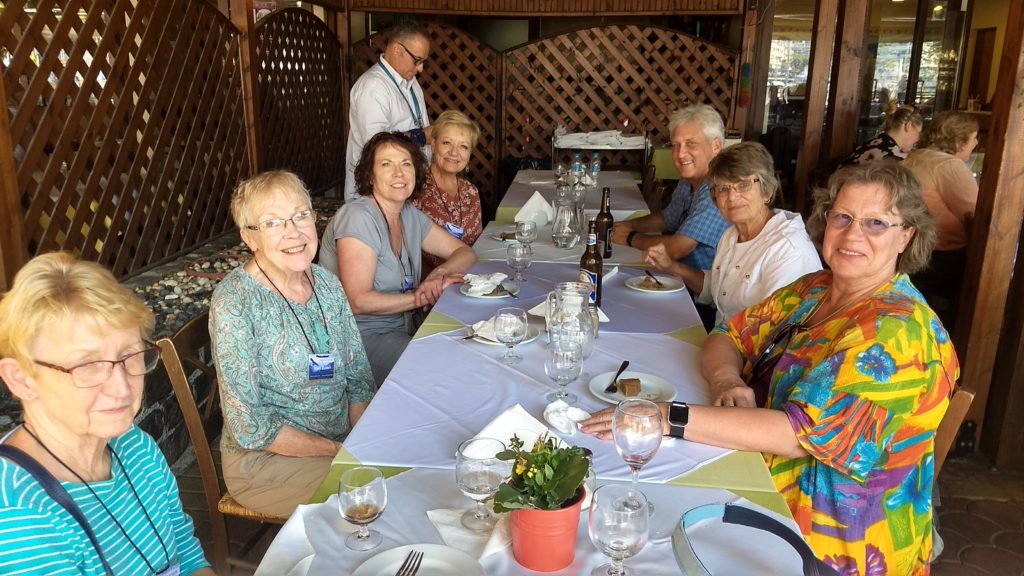
Lunch was at a local tavern in Kavala.

Then, we drive to Thessaloniki to see the Upper city

and back to the hotel for dinner and overnight, Some of us went for an evening strol to the White tower along the Sea

Categories: 2019 Greece, Uncategorized

Sept 30, 2019

September 30, 2019

After several flights we arrived in Thessaloniki around 10:30 PM to meet up with our guide, Constantinos, loaded up on our bus and headed for the hotel for a much needed shower and bed, We will start our adventure in the AM. Good night from all of us.

Categories: 2019 Greece, Uncategorized

2019 St Paul’s Greek Odyssey

We are getting ready for another adventure with Wings of Eagles Christian Tours. Be sure and follow along with our adventures as we explore Greece, Ephesus, Mykonos, Patmos, Crete, Heraklion, Santorini and Rome. We will be arriving on September 30th so watch for us.

Categories: 2019 Greece

10-18-18 – Caiaphas, Upper Room, Garden Tomb & Herodian

10/18/18 – After waking up on our last day in Israel, we check out of the hotel and proceed to the French church built on the scene of Caiaphas’ house where St. Peter denied Jesus before the cock crowed. The church is located on the side of a hill overlooking the southern part of the city and Doron is pointing out something special in the first picture. The second picture is what he was pointing out. Do you know what it is? Neither do I. And I can’t seem to remember now – but it was important enough at the time for me to take a picture.   Maybe someone will help me out. (It was the Field of Blood where Judas hung himself) But the third picture is looking to the east where we have a good picture of the southeast corner of the Temple Mount. In Jesus’ day this was known as “the Pinnacle of the Temple and it was here that Satan tempted Jesus to jump to see if the angels would catch Him.

Image may contain: one or more people, sky, cloud, mountain, outdoor and natureImage may contain: one or more people, sky and outdoor

10/18/18 – This is the front exterior of the French “Church of St. Peter in Gallicantu” a/k/a Caiaphas’ house, with murals and magnificent metal door art depicting Peter’s denial as Jesus looks on. Gallicantu means cock’s crow.

Image may contain: people standing and outdoorImage may contain: outdoor

10/18/18 – Down in the basement of the church are what would have been dungeons or holding cells from from Jesus day and include what were likely scourging stations for whipping prisoners.

Image may contain: outdoorImage may contain: outdoorNo automatic alt text available.

10/18/18 – These are some of the excavations of Caiaphas’ extensive house complex and the original stairway within in.

Image may contain: plant and outdoor

10/18/18 – A bronze statue of St. Peter chickening out in front of the servant girl and male chicken – The inscription “I do not know him.”

Image may contain: 1 person, standing, sky and outdoor
10/18/18 – The mural on this side of the church is a picture of the restoration that happened in Galilee and where we visited on (I think) was our second day in country. The inscription reads, “I give you the keys.” Inside the church is a mural of the trial of Jesus behind the altar, but they are conducting mass, so I settle for a far away shot.
Image may contain: indoor
10/18/18 – After Caiaphas’ house we go to the traditional sight of King David’s tomb. Doron is skeptical about the authenticity of the site. The monument can be traced back to Herod the Great, but this would have been nearly 10 centuries after King David’s death and he (Doron) thinks the tomb is too far from what was the city in David’s day. I’m not certain that King David needed to be buried in what was “downtown,” and in the 10th century BC, this would have been a nice peaceful place overlooking David’s Jerusalem. But Doron is an expert and I’m not, so I feel the need to pass along his skepticism. What is important, is that even in Jesus’ day, it was popularly considered to be King David’s tomb.
No automatic alt text available.Image may contain: 2 people, people standing
10/18/18 – Inside the tomb complex are a mosque, a synagogue and a church because David is an important character in all three of the great monotheistic religions. Here we dawn our kippahs and the men only proceed through the synagogue with its library to view the traditional resting place of the great king himself – trying not to disturb the Orthodox Jew concentrating in his fervent prayers. The green and gold curtain is the door to the ark, where the hand written Torrah scrolls are kept. The women went in thru a different entrance to view the sarcophagus which is what is believed to contain one of the crusaders. When asked “who is buried in David’s tomb?” the correct answer is “No one knows”.
Image may contain: indoorImage may contain: one or more people, hat and outdoorImage may contain: indoor
10/18/18 – This is the Christian chapel, built by the crusaders on what they believed to be the site of  David’s tomb. It had once been used as a mosque as demonstrated by the frame on the left edge of the photographs which showed the direction of Mecca. More importantly however, this is the site of the upper room where Jesus and His disciples celebrated the Last Supper. It’s also the same location where St. Peter gave his great Pentecost sermon in Acts chapter 2, including the line “Brothers, I may say to you with confidence about the patriarch David that he both died and was buried, and his tomb is with us to this day.” Acts 2:29.
Image may contain: 2 people, indoorImage may contain: 1 person, indoor

10/18/18 – I’m not sure how old the tree statue is, but it’s in the chapel and it’s three branches represent the Holy Trinity while the grapes and wheat represent the bread and wine of the Eucharist.

Image may contain: tree and outdoor
10/18/18 – Finally we arrive at the penultimate place in our visit, and for many in our group, the most moving – the Garden Tomb
.
10/18/18 – The Garden Tomb was discovered by Maj. General Charles Gordon when he was in Jerusalem. Gordon was a bit of an eccentric, and I agree with Doron, that the Church of the Holy Sepulcher is much more likely the actual place of Jesus crucifixion, burial, and resurrection. However we cannot know for 100% certain and the Garden tomb and nearby skull rock do make a compelling alternative. Regardless of all that however, the Garden Tomb certainly evokes more of a feeling of what the garden Jesus was buried in looked like at the actual time of His burial. Additionally, since the Garden tomb is available for viewing, only by appointment, and is flatly rejected by non-Protestant Christians, it is not the scene of mob chaos that the Church of the Holy Sepulcher is. The tour guide gives us a very interesting story about the garden and its history, then leaves us to look about and enter the tomb before we celebrate a Eucharistic service in one of the out door chapels.
Image may contain: one or more people and outdoorImage may contain: plant, tree, table, outdoor and natureImage may contain: one or more people, people standing, plant and outdoorImage may contain: one or more people, plant and outdoor
10/18/18 – Time for one more site before heading to the airport. This is the Herodium, another of Herod’s fortresses, this time in the wilderness just east of Jerusalem. Herod was not popular with the religious Jews in Jerusalem, so he built himself a subdivision in the suburbs on top of a hill, after he had the height of the hill doubled.
Image may contain: one or more people and outdoor
10/18/18 – The scale model in the visitors’ center, half way up the slope, give an indication of the size of the fortifications and the extensive pool complex big enough for boats to row around and a village for servants and visitors at the foot of the hill.
Image may contain: 1 personImage may contain: 1 person, outdoor

10/18/18 – Taking the path up to the summit, the remains of the facilities at the base are still visible, even though they were trashed during the Jewish War (66-73 AD) and Bar Kochba Revolt (132-136 AD).

Image may contain: sky, outdoor and nature
10/18/18 – arriving at the summit, the recently excavated ruins of the fortress begin to give a picture of the one time splendor of the facilities, as does another scale model
Image may contain: sky and outdoorImage may contain: one or more people and outdoorImage may contain: outdoor
10/18/18 – The commanding view in all directions (which includes a view all the way to the Dead Sea on a clear day), give an indication of why the site was chosen for Herod’s residence and eventually his tomb. He actually wasn’t buried there long however. Did I mention his unpopularity? Shortly after his death and burial, Jewish Zealots broke open and looted his tomb. I don’t think anyone knows what they did with his body, but I suspect there were several well fed jackals walking around the desert around the same time.
Image may contain: sky, mountain, outdoor and natureImage may contain: sky, mountain, outdoor and natureImage may contain: sky, cloud, mountain, outdoor and natureImage may contain: sky, mountain, outdoor and natureImage may contain: sky, mountain, outdoor and nature
10/18/18 – As extensive as the buildings were atop of the man made mountain, they don’t scratch the surface (couldn’t resist that one) of the facilities inside the mountain itself. These include an extensive tunnel and cistern system, not to mention the private theater and tomb.
Image may contain: cloud, sky and outdoorImage may contain: outdoorNo automatic alt text available.

10/18/18 – As I mentioned, the mountain was designed to be a fortress and was used as such by Jewish rebels in their two wars against Rome. These are “rolling stones” – nothing to do with a rock band, used to roll downhill at formed bodies of troops below to discourage attacks against the mountain top.

Image may contain: sky, outdoor and nature
10/18/18 – Finally, after nearly two weeks in Israel, we say goodby to the ruins of the Herodium and head for the modern world of the Ben-Gurion Airport in Tel Aviv-Yafo
Image may contain: sky, mountain, outdoor and nature
However, before we head to the airport we stop in Bethlehem at The Tent for our fair well dinner. Here we presented Pr Dave with a thank you gift.
A weary group headed for the airport and their long flight home. No mater how wonderful an experience we have there is nothing like our own bed and shower!
Image may contain: 1 personImage may contain: one or more people and indoorImage may contain: Jackie Miller, sitting, closeup and indoor
SHALOM UNTIL NEXT TIME!!
Thank you to Scott Miller who’s commentary I plagiarized from his Facebook posts – with his permission.  Also Will Imfeld did the commentary for 10/7 – 10/10/18.
Thanks guys, I would never have finished this without you.


Categories: Israel 2018

10-17-18 Baptism, Jericho, Qumran, Masada, Dead Sea, Valley of Shadow of Death

10/17/18 – We head down from Jerusalem across the Judean wilderness to where the Jordan flows into the Dead Sea where we see a series of churches mostly on the Jordanian side.

Image may contain: sky, outdoor and natureImage may contain: sky, cloud, tree and outdoor

10/17/18 – Five meters across the river is the nation of Jordan. Doran says often we will see Israeli or Jordanian soldiers – but more often than not, they’re drinking coffee somewhere. Today must have been the Jordanians’ turn to drink coffee and only the elite of the Israeli army are keeping guard on the border.

Image may contain: 1 person, outdoor
10/17/18 – The spiritual significance is that this was the spot where John the Baptizer baptized Jesus in the Jordan River and here Pastor Dave leads us in our morning devotional and reaffirmation of our baptism.
Image may contain: one or more people, people standing, sky, tree, outdoor and nature
10/17/18 – After the devotional and a dip for many in the river, we head through farmland to the city of Jericho. Jericho is the oldest continually inhabited city on earth. Today it is a popular vacation spot for wealthy Arabs, and Doron calls it “the Florida of Israel.” At least for Arabs. Jews have Tel Aviv-Yafo, which is where most of them live anyway.
Image may contain: sky, tree, plant, cloud, outdoor and natureImage may contain: sky, tree, cloud, outdoor and nature
10/17/18 – Of course for most Christians, mention of Jericho immediately brings to mind the story of Zacchaeus who climbed the Sycamore tree to catch a glimpse of Jesus in Luke chapter 19. Of course, some enterprising Arabs are glad to show Christians the very tree, but in reality this sycamore tree is only a few hundred years old, but is of the same type as in the Bible.
Image may contain: one or more people, tree and outdoor
10/17/18 – The mountain just beyond Jericho is purported to be “the Mount of Temptation” where Satan tempted Jesus after his baptism in the Jordan. There’s no way to know for certain if this is the same mountain, but the location makes sense.
Image may contain: mountain, sky, outdoor and natureImage may contain: plant, sky, tree, outdoor and nature

10/1718 – A monastery rests on the side of the mountain.

Image may contain: sky, outdoor and nature

10/17/18 – I had some fun posing for this pic. It looks like I am standing on the very edge of a precipice, but in reality it’s only s very steep slope into a deep wadi. Standing on the edge, I pretended to lose my balance and was about to fall over the edge. It got a good reaction from some of the others.

Image may contain: 1 person, smiling, standing, child, outdoor and nature
10/17/18 – Date palms, which don’t require much moisture, do very well in this sunny environment.
 Image may contain: sky, cloud, outdoor and natureImage may contain: sky, tree, outdoor and nature
10/17/18 – Heading south along the western shore of the Dead Sea, we come across the cave of Qumran in whose cave complex the 1st century Essene community hid the scrolls that later became known as the Dead Sea Scrolls – the greatest archeological discovery of the last millennium. The first pic is the cave where the Isaiah scroll was discovered and the other 2 are cave #4 where more than 400 of the roughly 1000 scrolls were found.
Image may contain: sky, mountain, outdoor and natureImage may contain: sky, outdoor and nature
10/17/18 – OF course the Essenes were not cave dwellers, but lived in an extensive settlement. Their homes and other buildings are being excavated in the area near the caves.
Image may contain: one or more people, sky, ocean, outdoor, nature and waterImage may contain: sky, outdoor and nature
10/17/18 – Continuing south we pass En Gedi where David and his men hid out while being pursued by King Saul.
Image may contain: mountain, sky, tree, outdoor and natureImage may contain: sky, mountain, outdoor and nature
10/17/18 – In the distance ahead we see a mountain shaped like a ship rising above the desert , the Herodian fortress of Masada which had lain abandoned for centuries after the Jewish revolt in 73 AD until its rediscovery by some Americans in 1838.
Image may contain: people standing, sky, outdoor and natureImage may contain: sky, mountain, ocean, outdoor and nature
10/17/18 – Most people are probably familiar with the siege of Masada which was held by 900 some odd Jewish Zealot men, women, and children against the 10th Roman Legion for about 6 months in 73 AD – the last Jewish stronghold after the destruction of Jerusalem in 70 AD. What I was unprepared for was how big the mountain top was. A model is in the visitor’s center.
Image may contain: one or more people and outdoorImage may contain: table and indoor
10/17/18 – From the top of the mountain, one has a clear view of the Dead Sea – or what’s left of it with the falling water levels, off to the east. In the lower right of the second pic, the outline of one of the Roman camps is still visible.
Image may contain: sky, outdoor and nature

10/17/18 – Again, a nice scale model gives an idea of how the north end of the fortress would have looked in its glory days after Herod built it.

Image may contain: outdoor
10/17/18 – These pictures are just two of the dozen or so HUGE storerooms that were full of grain and other supplies. The fortress had enough storage space for supplies to withstand a siege almost indefinitely. The last pic shows that some of the buildings were plastered and had frescoes painted on the walls.
Image may contain: one or more people and outdoorImage may contain: outdoorImage may contain: outdoor and indoorImage may contain: sky and outdoor
10/17/18 – Doron explains the three tiered palace complex that rested against the inaccessible north side of the mountain.
Image may contain: 3 people, people standing, mountain, beard, sky, child, outdoor and natureNo automatic alt text available.

10/17/18 – Meanwhile, moving around to the west, we can see more Roman camps from where the Romans put Jewish slaves to work in the summer heat building a ramp against the most accessible western side of the mountain.

Image may contain: sky, mountain, outdoor and nature
10/17/18 – Some of the plastered walls and mosaic floors give an idea how much trouble went into making Herod’s remote “vacation home” comfortable.
Image may contain: sky, outdoor and natureImage may contain: shoes and outdoor
10/17/18 – The remains of the multi-roomed Roman bathhouse.
Image may contain: outdoor and indoorImage may contain: outdoorImage may contain: indoor and outdoor
10/17/18 – the main Roman camp and the remains of the man made ramp built to advance a siege tower against the walls is still visible on the west side of the mountain
Image may contain: mountain, sky, outdoor and natureImage may contain: mountain, sky, outdoor and natureImage may contain: sky, outdoor and nature
10/17/18 – As the Roman tower rose up the ramp and the ram began breaking down the wall, the Jews knew that the next day they would be killed or enslaved, their women violated and their children sold into a lifetime of slavery. So they wrote their names on pot shards – “the lots.” By agreement the men killed their own wives and children then selected 10 men by lot to kill the other men. The 10 men left, a minyan, or minimum number of men left to make a synagogue then prayed the kaddish for the dead. There were 2 women and 5 children who survived by hiding in the cistren. The lots with names were found in the excavation.
No automatic alt text available.No automatic alt text available.

10/17/18 – Finally the last 10 men drew lots to kill each other and the last man killing himself. In the Synagogue building, they burred their scrolls. The scrolls were discovered. It appears that the last reading was from Ezekiel 37: “And he said to me, “Son of man, can these bones live?” And I answered, “O Lord God, you know.” Then he said to me, “Prophesy over these bones, and say to them, O dry bones, hear the word of the Lord. Thus says the Lord God to these bones: Behold, I will cause breath to enter you, and you shall live. And I will lay sinews upon you, and will cause flesh to come upon you, and cover you with skin, and put breath in you, and you shall live, and you shall know that I am the Lord.” Ex 37 3-7.

As Doron pointed out: The Jews are still here and here to stay. Where are the Romans?

Image may contain: one or more people and outdoorImage may contain: one or more people, sky, outdoor and nature

10/17/18 – after a hot day on top of a mountain in the desert, what can be more refreshing than a nice dip in the Dead Sea? That is if you consider warm water with almost 10 times the salinity of the ocean as refreshing. Some people went for the full experience, but Jackie and I were satisfied with getting out feet wet and then drinking beer in the lowest bar on earth – bout 1300 feet below sea level.

Image may contain: one or more people, people standing, tree, sky, basketball court, plant and outdoorImage may contain: outdoorImage may contain: 2 people, people standing, ocean, sky, outdoor, water and nature

10/17/18 – Just a passing safety tip, in case anyone reading this is considering a trip to the Dead Sea. If any are dangerous heart patients or own high blood pressure, maybe you should see if you can sell it before your trip.

No automatic alt text available.
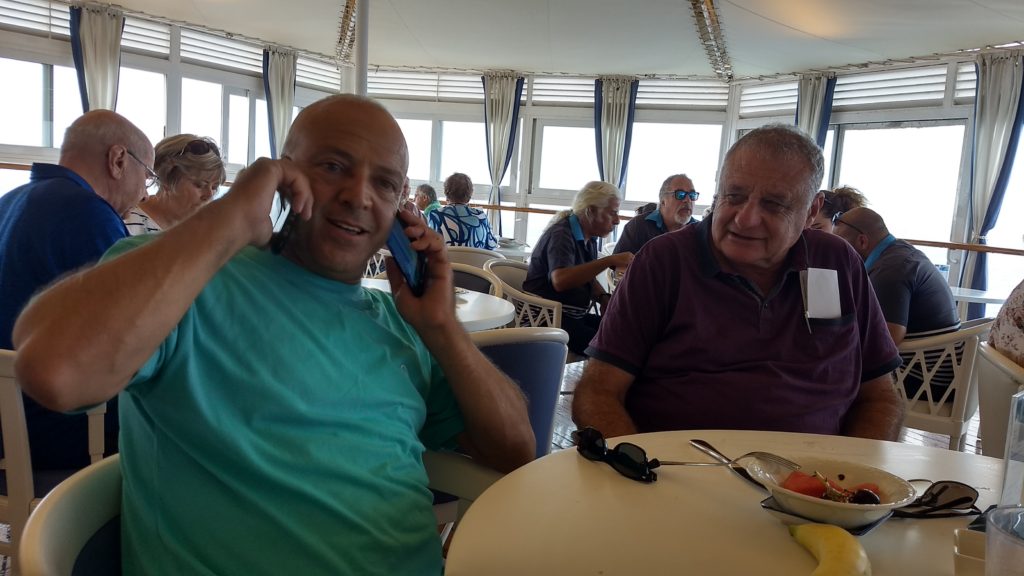
10/17/18 – As the sun starts to set over the Judean wilderness, we make one more stop. This is practically an unknown place. In the distance, leading from the isolated Monastery of St. George, one can see the lighter colored path. This was the old Jericho Road. This is the setting of the Parable of the Good Samaritan. Many believe that it was here, in this wilderness, not far from Bethlehem that David wrote the 23d Psalm and that this gorge was what he had in mind when he wrote of the Valley of the Shadow of Death.
Categories: Israel 2018

10-16-18 – Sifting, Bethany, Holocaust Museum

10/16/18 – This may have been the funnest thing we did on the whole tour of Israel. Remember about the tunnels excavated under the city? Ever wonder what they did with all the dirt they hauled out of there? Well, they have archeologists sift through it for artifacts, and we got to spend some time doing just that. Will, Aunt Harriet’s grandson, even found a small coin, likely from the Herodian period.

10/16/18 – After the archeology fun, we drove over the Mount of Olives (actually it was rather circuitous because of the Israeli security fence) to the village of Bethany, most famous for the place where Jesus raised Lazarus from the dead. In Jesus’ day (before the fence) Bethany was only about 4 1/2 miles east of Jerusalem and raising Lazarus was on everyone’s mind when he rode into Jerusalem on Palm Sunday. The Arabic name for the town is now Al Azariah in honor of its most famous resident.

10/16/18 – The modern Franciscan church is built near the site of an older Byzantine one that had been destroyed by the Persians and now sits nearby the large mosque. The columns and mosaic floors of the old Byzantine church are still visible in places.

Image may contain: one or more people, sky and outdoorNo automatic alt text available.No automatic alt text available.

10/16/18 – Inside the church are beautiful murals commemorating the raising of Lazarus with the story from John chapter 11 in Latin.

Image may contain: one or more people and indoorImage may contain: indoorImage may contain: indoor

10/16/18 – A little further up the hill from the church is the traditional site of the tomb itself. There’s no doubt this was a 1st century tomb, but there’s no way to absolutely verify it was THE tomb of Lazarus.

Image may contain: one or more people and outdoorImage may contain: shoes and outdoorImage may contain: shoes and outdoor

10/16/18 – This is the border wall that separates Bethany from East Jerusalem and the Israeli administered West Bank from that administered by the Palestinian Authority.

Image may contain: sky, outdoor and nature

10/16/18 – After Bethany we visited Yad Vashem – literally “Hand and Name,” or simply the Holocaust Museum. My VERY basic Hebrew had some trouble understanding the title Hand and Name, but Doron tried to explain some of the subtlety of Hebrew that does not come across in a literal translation. The Yad or hand indicates a remembrance and the Shem or name evokes the millions of Jews killed in the Holocaust and the efforts to catalogue each of their names that the Nazis tried to erase from history. What is interesting is that the Nazis kept very good records and recorded the names. This was a VERY moving experience, so I did not take many pictures. Sorry. Much of it was just too intense. But here Doron is explained the trees that were planted and dedicated to the remembrance of the “Righteous Among the Nations,” who tired to save Jews from being murdered.

10/16/18 – This is the entrance to the special hall dedicated to the 1.5 million Jewish children murdered in the Holocaust. It was dedicated by the parents of Uziel Spielgel, who was murdered at 2 1/2 years of age. They survived and later moved to the United States and became successful enough to build the hall. The intensity was beyond description inside, so I won’t even try, but people frequently exit wiping tears from their eyes.

Image may contain: plant, tree and outdoor

10/16/18 – This is a memorial dedicated to Jansuz Korczak who organized an orphanage in the Warsaw Ghetto and eventually was able to care for about 250 children. When he received word that the children were to be transported to Treblinka, he knew that they were to be killed. So he convinced the Nazis to let him organize the transfer “like a field trip” and to accompany the children, so that they would not be afraid. Even though he did not have to go with them, he did so and was put to death with them.

10/16/18 – The main hall of the Holocaust museum could take hours to go through and read each exhibit. but at the end, after coming through the holocaust, one is greeted by the view – the land of Israel and the hope that NEVER AGAIN will the Jews have no country and be at the mercy of those who would want to exterminate them.

Image may contain: sky, tree, plant, mountain, cloud, outdoor and nature

10/16/18 – I would be VERY much amiss if I did not mention our indomitable drive, Tamer, an Israeli Arab, who drove us around. We were all IN AWE of this guy and his ability to maneuver a bus better than most of us could drive a sports car. He not infrequently passed through tight squeezes with, not inches, but millimeters to spare on either side. He had HUGE arms, but was always smiling, polite, and pleasant and never showed a bit of displeasure no matter what he had to put up with. I cannot speak highly enough of him. We had to say goodbye to him today since he was reassigned to another group of tourists flooding to the Holy Land.

Image may contain: 1 person, sitting and car

Categories: Israel 2018

10/15/18 Old City

10/15/18 – We finally enter the Old City of Jerusalem though Herod’s Gate instead of the busier Damascus Gate. When St. Stephen was stoned in chapter 7 of Acts, the traditional place was either here or at the Damascus Gate, but Doron assures us it actually took place at the other gate. I believe tradition has it at the Damascus Gate, but it happened here, but I may have it backwards. I’m not clear on how they determined either one of those things, so there you go.

Image may contain: one or more people and outdoor

10/15/18 – stepping inside to the narrow streets of Muslim Quarter of the Old City is like stepping back in time, although Doron assures us that the streets in Jesus’ day were 10-15 feet beneath these and not necessarily in the same place.

Image may contain: Jackie Miller, outdoor
10/15/18 – This is the pool complex of Bethesda. The pillars are the remains of a Byzantine Church built by St. Helena, the mother of Constantine. She did so after demolishing the pagan Roman temple that was built to keep the Christians away, but marked the spot for her, although here the pool marked the spot anyway. The Muslims destroyed the Byzantine church and the Crusaders put up a new one. The Mamluks destroyed that one, but the Turks allowed the French to build a new one in appreciation for helping them fight the Russians in the Crimean War in the 1850s.
10/15/18 – This is a Crusader era Church to St. Anne, the mother of St. Mary. It is claimed to be the birthplace of Mary, but this is dubious as Mary was probably born and raised in Nazareth. It is right next to the Pool of Bethesda where Jesus healed the crippled man. Bethesda was an extensive pool complex on the northern end of the city, opposite the Pool of Siloam where Jesus healed a blind man in the South part of the city, that we passed coming out of Hezekiah’s Tunnel the other day.

10/15/18 – This place goes by the name of Lithostratos. It’s way down in the basement of a modern building up at street level. In fact, it is the original floor of the old Antonia fortress located and attached to to northwest corner of the Herod’s Temple Mount. It is believed that here Jesus appeared before Pilate for his trial and was scourged by the Roman soldiers. The first picture is a little hard to see, but it is the remains of a game board scratched into the surface of the rock by Roman soldiers. The game was called the game of kings and the Romans would use it to decide what manner of humiliation they would impose upon condemned prisoners before their crucifixion.

No automatic alt text available.Image may contain: 1 person, outdoor and indoorNo automatic alt text available.
 10/15/18 – A signpost for what may be the most famous street on the face of the earth. Doron took a dismissive view of what he calls “the catholics” making a big deal of walking along it since, like he said, the real street would be 10-15 feet under this one and no one knows the route for sure anyway. To my perspective, even if these aren’t the very bricks Jesus walked on, they have been sanctified by the millions of feet of passing pilgrims meditating on Jesus’ passion. I was even moved enought to sing “the Via Dolorosa” in Spanish because, well it’s named after the street and is one of the only songs I know the words to in Spanish.
Image may contain: outdoor
10/15/18 – Along the via Dolorosa are the Stations of the Cross. They used to be the same stations that people mark on Good Friday in Catholic Churches around the world until Pope John Paul II changed them from the traditional events to the biblical events. I believe the ones on the via Dolorosa still maintain the traditional stations. This is station # 3, Jesus falls for the n time [I forget which] and #4, Jesus meets his mother. If you want to know the traditional events of the stations of the cross, watch Mel Gibson’s “the Passion of the Christ” because it’s basically the station of the cross on film.
Image may contain: one or more people, people standing and outdoorImage may contain: outdoor

10/15/18 – The Arab market in Jerusalem. Long before there were shopping malls in America, the Arabs had already perfected the system.

Image may contain: one or more people and indoorImage may contain: 4 people, people smiling, outdoor
10/15/18 – Before he became the boogie man of his age, Kaiser Wilhelm II built two churches in Jerusalem. One for the Catholics and one for “die Evangelisch.” This is often referred to as “the Lutheran Church of the Resurrection” although how “Lutheran” was the Church in Germany by this time is a matter of some dispute, especially for those of us in the LCMS, whose progenitors fled Germany for America to practice a purer form of Lutheranism, uncorrupted by the Calvinism that had snuck into German Protestantism under King Friederich Wilhelm III. But I’m going off on one of my tangents. This is Kaiser Wilhelm’s beautiful Protestant church in Jerusalem.
Image may contain: 1 person, outdoorImage may contain: 1 person, indoorNo automatic alt text available.
10/15/18 – Finally we arrive at what is, for many, the apex of their visit to Jerusalem – the Church of the Holy Sepulcher, the likely sight of the crucifixion, burial, and resurrection of Jesus. Crowds wait for hours to get into the traditional grave site which is inside a shrine inside the larger church. The grey dome above and to the right of the entrance is over the traditional place for mount Golgotha – the exact spot of execution.

The dome over the main nave of the church.

Image may contain: indoor

10/15/18 – This is the line of people going up to the place of Golgotha under the grey dome we saw from outside the building. They come down from the other side.

Image may contain: one or more people and outdoor

10/15/18 – This is a mural above “the slab” depicting Joseph of Amirmathea and others putting Jesus into Joseph’s tomb.

Image may contain: one or more people, indoor and outdoor
10/15/18 – This stone inside the doors of the church that people are praying over and kissing is called “the slab.” It is a piece of marble where tradition says Jesus body was laid after the “deposition” or removal from the cross and where his body was cleaned and dressed for burial.

10/15/18 – This is the shrine over the burial crypt of Jesus and part of the hours long line waiting for a chance to go in a few at a time for 5 seconds. A priest waits outside to control “visiting hours” – actually seconds inside. Behind the shrine in a side narthex are more tombs of a similar nature. Doron tried to get us in there, but the crowds were so big we could not even get in there. We’ll talk about this a bit more when we get to the Garden tomb in a few days.

Image may contain: 2 peopleImage may contain: one or more people, crowd and indoorImage may contain: one or more people

10/15/18 – More stores. Doron brought us to another store run by some of his many friends where we know we’ll get a fair deal. Jackie was able to find an elaborate piece of gold and ruby jewelry that Doron was able to make affordable for her.

No automatic alt text available.

10/15/18 – We enter the Jewish Quarter of the Old City. Although still part of the “Old City” the Jewish Quarter is almost entirely new construction put up since 1967. The previous Jewish community was evicted after the 1948 War of Independence and the buildings largely demolished by the Arabs. When Israel took control of the Old City in 1967 they resettled Jews in the Jewish Quarter and invested heavily in new construction.

Image may contain: 1 person, standing and outdoor
10/15/18 – This is one of the excavated streets in Jerusalem. This street was part of the city in Jesus’ day and was actually WIDER than the part we can now see.
Image may contain: people standing and indoorImage may contain: one or more people, shoes, outdoor and indoor
10/15/18 – We finally arrive at the Western, or “Wailing” Wall of the Temple Mount. The corner of the wall in the first picture, near the Al-Aqsa Mosque is looking down on the spot that I took the picture the other day looking UP at the wall.
Image may contain: one or more people, sky and outdoorImage may contain: one or more people, sky and outdoor
10/15/18 – This is the part of the city most sacred to Jews. It’s the retaining wall of the old Temple Mount and the closest place ABOVE GROUND to where the Holy of Holies within the Temple would have been. Women have to go to the right to pray. Men go to the left and are required to wear a loaned kippah, or yarmulke from a basket of them if they don’t have their own hat, to approach the wall. Many people, Jews and Gentiles leave written prayers in the cracks in the wall. It is illegal to remove or read anyone’s prayers from the cracks and subject to harsh punishments. I don’t know what happens to the old notes, or if they ever run out of space.
Image may contain: one or more people, sky and outdoorImage may contain: one or more people and outdoor

10/15/18 – Turning around and looking west from the Wailing Wall, the new construction of the Jewish Quarter is evident.

Image may contain: 3 people, sky and outdoor
10/15/18 – A lesser known fact is that excavations under the city have uncovered even more of the Western Wall of the Temple Mount and the 1st century street running along it.
Image may contain: one or more people, outdoor and indoorNo automatic alt text available.
10/15/18 – From here, beneath the modern street, it is possible to get even closer to the location that would have been the Holy of Holies and Jews can avail themselves of the opportunity to pray here as well.
Image may contain: table and indoor
10/15/18 – the massive size of the Herodian stones is evident in these pics. Some of the stones would have weight as much as 500 tons – the weight of a small ship. It is no wonder that the disciples remarked to Jesus about the large stones in Mark chapter 13, just before Jesus predicts the downfall of the city.
Image may contain: 1 person, night and outdoorImage may contain: night and outdoor

10/15/18 – The stones were quarried not far from the northern end of the wall. When Herod died in 4 BC, the workers walked away from the quarries leaving some stones half way quarried or laying about.

Image may contain: one or more people

10/15/18 – We leave the Old City through the Lions Gate. What this has to do, if anything, with the film company, I don’t know. How the gate got its name is obvious, but the back story is thus: Suleyman the Magnificent, 16th Century Ottoman Sultan had a dream where he was commanded to rebuild the walls of Jerusalem. The dream warned that if he did not do so, he and his family would be eaten by lions. The lions on the gate are in honor of the beasts who did not eat him.

Image may contain: 2 people, outdoor
Categories: Israel 2018